Spoiler warning: this article reveals important events in the game’s story.
Explore the history of every GTA
Claude and the betrayal that starts the story
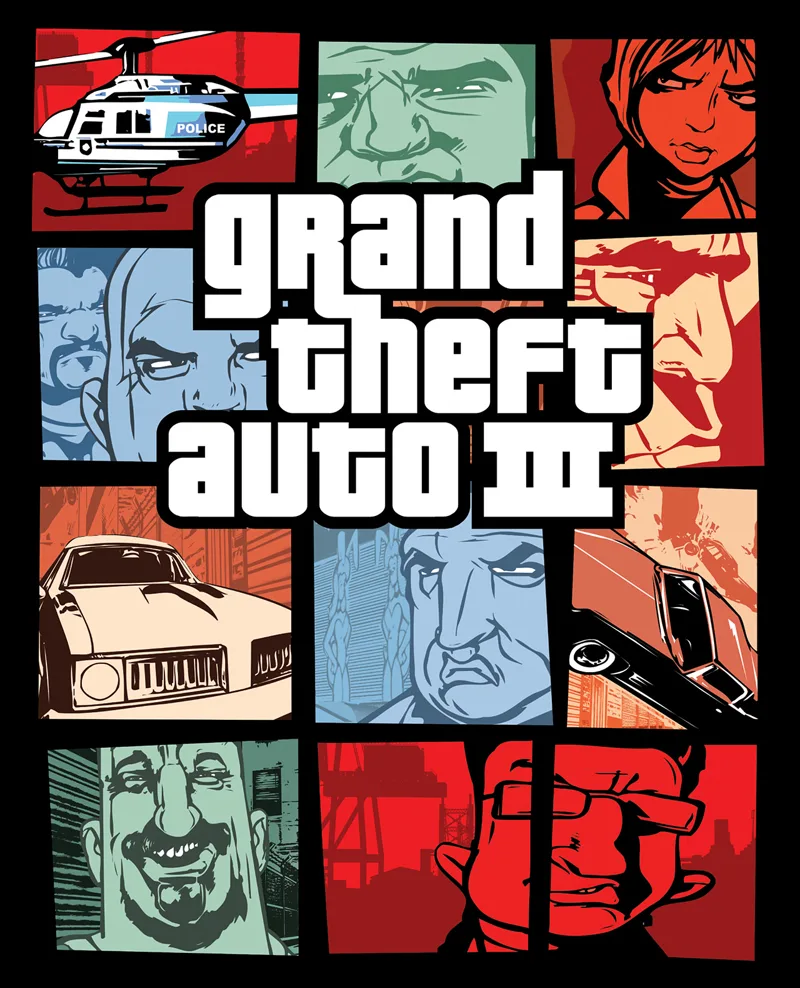
GTA III follows Claude, a criminal betrayed by Catalina during a robbery in Liberty City. Set in 2001, the story turns his effort to rebuild a criminal career into a pursuit of revenge. After escaping a police convoy alongside 8-Ball, Claude starts again among gangs and Mafia families. His silence leaves other characters to define the conflicts. Rather than hearing his private thoughts through monologues, players infer his priorities from the work he accepts and the alliances he abandons.
The Leones, Maria and leaving Portland
Luigi, Joey and Toni Cipriani bring Claude closer to Salvatore Leone. Trust proves temporary: Maria provokes Salvatore’s jealousy and Claude’s position becomes dangerous. Escaping with Maria and Asuka Kasen opens the next phase, associated with the Yakuza. Liberty City is more than scenery. Changing allies makes certain territories more dangerous and gives familiar routes a different meaning. Narrative progress therefore changes the everyday experience of a city the player has already begun learning to navigate.
Donald Love, the Cartel and Catalina’s ending
Donald Love’s assignments intensify the conflict between organisations. Claude kills Kenji in a way that implicates the Cartel, while Asuka pursues those she believes responsible. Catalina returns to the centre of events, kills Asuka and Miguel, and kidnaps Maria. The ransom leads to another ambush, but Claude survives, frees Maria and shoots down Catalina’s helicopter. A subsequent off-screen gunshot creates a deliberate ambiguity. It does not provide unequivocal proof that Claude kills Maria.
How DMA Design built the leap to 3D
DMA Design developed GTA III with Rockstar Games; the studio had not yet become Rockstar North when the PlayStation 2 game launched in 2001. Windows followed in 2002, with Xbox later. RenderWare supported a three-dimensional city combining traffic, pedestrians and missions with a camera close to the character. It did not use RAGE, associated with a later Rockstar era. The crucial leap was making the urban spectacle navigable from a perspective that changed orientation, combat and the perception of distance.
A city that tells stories between missions
Radio, conversations and advertisements sustain a satire that continues when Claude is not following a main objective. Neighbourhoods and their connections teach navigation through experience, while police pursuits generate unexpected situations. This combination explains its influence better than claiming it invented every open-world idea. GTA III reorganised earlier elements into a particularly cohesive experience. Its importance lies both in the crime plot and in the smaller stories generated by taking a detour, mishandling a car or finding another route.
Prequels and remasters: what changes
Liberty City Stories covers events in 1998, while GTA Advance takes place in 2000 before Claude’s adventure. Published later, they expand the 3D universe rather than being chapters required to understand the original release. The anniversary mobile edition and The Definitive Edition are adaptations or remasters of GTA III, not new campaigns. A useful historical reading starts here and then returns to the prequels, observing how they develop characters and places already encountered in the 2001 game.