Spoiler warning: this article reveals important events in the game’s story.
Explore the history of every GTA
What the first Grand Theft Auto is about
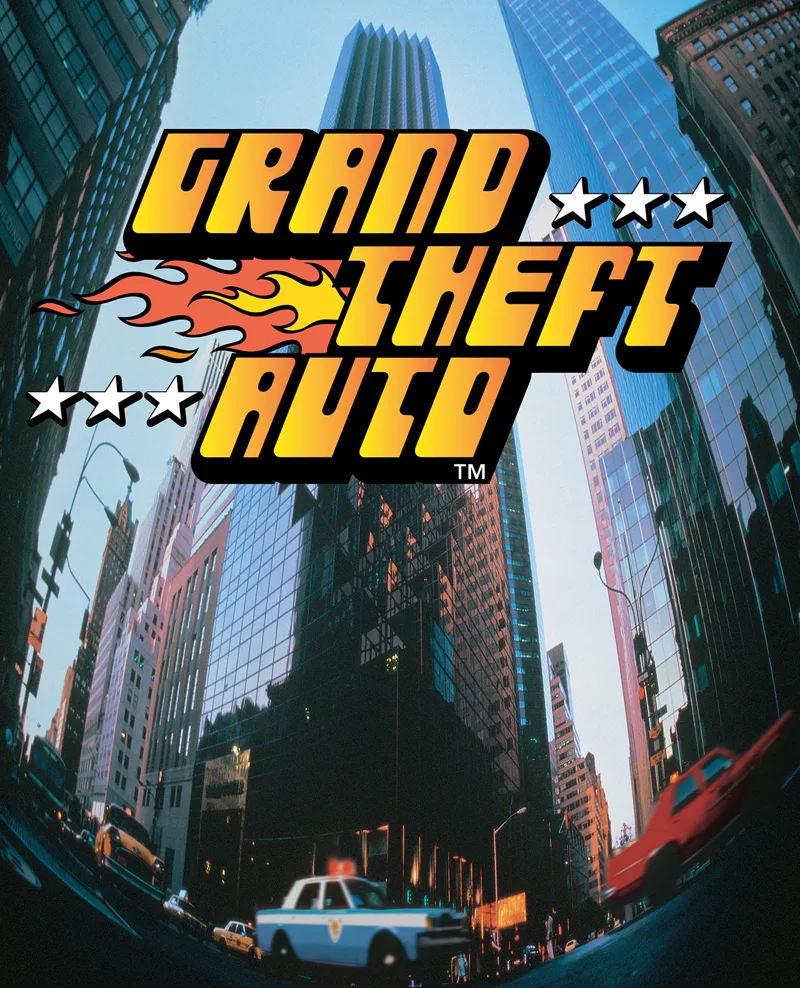
Developed by DMA Design and originally published by BMG Interactive in 1997, Grand Theft Auto follows a criminal’s rise through Liberty City, San Andreas and Vice City. Players choose an avatar, rather than receiving a cinematic biography comparable to CJ’s or Niko’s. Identity comes from accepting work, earning money and surviving the enemies those jobs create. This is where GTA’s urban freedom took shape, although the overhead presentation looks very different from the modern games.
Liberty City: working for Bubby
The opening stretch puts the protagonist to work for Robert “Bubby” Seragliano. Payphones deliver instructions and threats, making the city a network of opportunities rather than a chain of lengthy cutscenes. The rivalry with Sonetti leads to further killings and ends with Bubby warning that the police are closing in. Leaving town becomes the sensible move. This pattern explains the narrative: success does not settle the character’s life, but sends them elsewhere to begin another dangerous professional relationship.
San Andreas, Vice City and the ending
San Andreas brings work for Uncle Fu and El Burro. Vice City follows, with corrupt police officer Samuel Deever using incriminating evidence to force the protagonist into his service. The final stretch leads to Brother Marcus, whose substantial payment provides a retirement ending. This is not the San Andreas introduced in 2004: the name identifies a city here. Nor should the later maps be treated as literal continuations. Rockstar has reused city names and ideas across different fictional universes.
From Race’n’Chase to the 1997 game
The project took shape at DMA Design in Dundee, Scotland, the studio later renamed Rockstar North. Design documents from 1995 described Race’n’Chase, with driving, pursuits and multiplayer among its ideas. Criminal activity and open exploration gained importance during development. The release reached computers before PlayStation, while the Game Boy Color adaptation came later. Crediting the 1997 original to an already established Rockstar North would obscure that corporate and creative evolution.
Why its design still matters
Its contribution goes beyond stealing cars: it combines a navigable city, varied vehicles, optional work, police pursuits and rewards that unlock progress. The overhead view demands quick reading of junctions and routes, while radio stations give travel a distinctive character. London expanded this model and GTA 2 added competing gang loyalties. Following publication order helps explain that evolution without expecting the first game to offer the cinematics, controls or dramatic structure developed by its successors.